
Rock Beauty ( 7 days for delivery )
Earns 400 Aqua Points, worth £4.00 off a future order. How points work
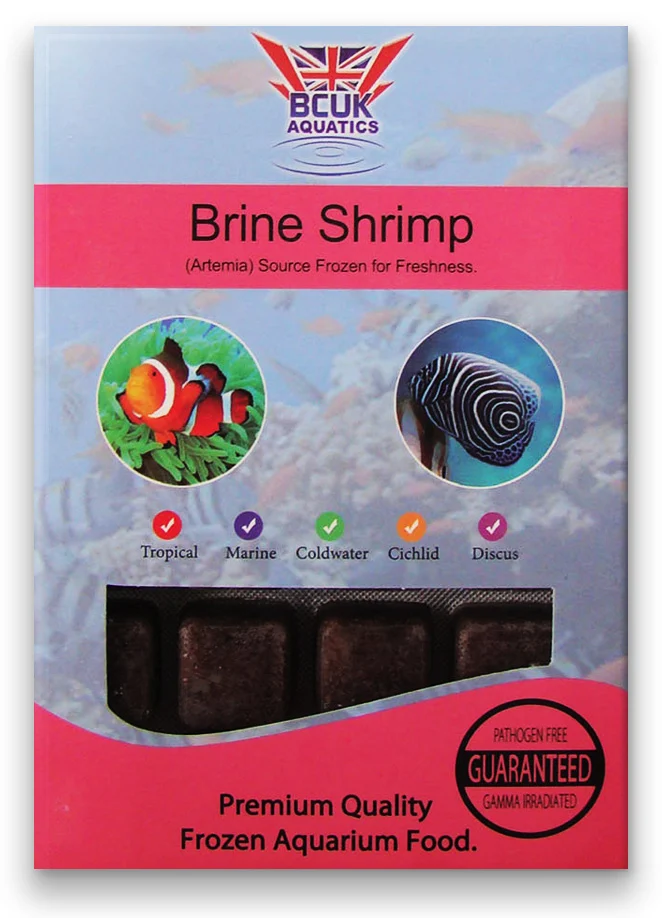
Recommended food
- Arrive alive guarantee
- Overnight, oxygen packed
- You pick the day
Livestock delivery, done properly
- Overnight insulated delivery on fish orders, £19.95, and free collection near Gatwick
- Arrive-alive promise plus our Perfect Health Arrival guarantee
- You choose the delivery day at checkout. We only show days we can genuinely deliver
- £35 minimum on livestock orders. Dry goods ship free alongside fish
Marine Fish Perfect Health Promise
All marine fish have a Perfect Health Arrival guarantee. For the following reasons, we cannot guarantee beyond that.
A number of different reasons can affect why a marine fish does not settle into its new environment. These range from:
- Unsuitable water conditions: incorrect pH, high ammonia and nitrite levels.
- Tank bullies: some marine fish are very passive and will not mix well with more boisterous tank mates.
- Incorrect tank size: please research the fish you are buying, as some will become stressed in a tank that is too small.
If you have any problems on arrival
Please contact us straight away and we will extend your guarantee until the fish is healthy again. You must call on the arrival day to activate this.
01293 749046Credit notes
If any of your aquatic life dies during our guarantees and has been acclimatised in a mature aquarium, please take a photo and email it across and we will send you a credit note.
Please email photographs of the deceased specimens to sales@aquaticstoyourdoor.co.uk.
About this fish
Maximum SizeThe Rock Beauty Angelfish (Holacanthus tricolor) can grow to approximately 25–30 cm (10–12 inches) in length.
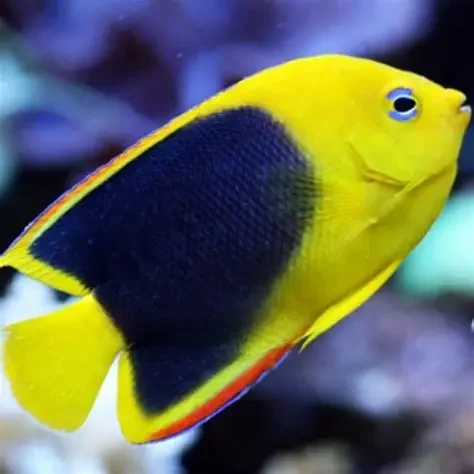
It is a striking marine angelfish recognised by its bright yellow body, black central section and yellow tail and dorsal fin.
Unlike the Bellus Angelfish, the Rock Beauty belongs to the genus Holacanthus and is not considered reef safe. It has a more specialised diet and can be challenging to maintain successfully in captivity.
One interesting characteristic is its dramatic colour transformation as it matures, with juveniles displaying a different pattern from adults.
Origin and Export LocationsThe Rock Beauty Angelfish originates from the tropical Western Atlantic Ocean, particularly the Caribbean and surrounding regions.
Its natural distribution includes:
Florida and the Florida Keys.
The Bahamas.
Bermuda.
The Gulf of Mexico.
The Caribbean Sea.
Central America.
Northern and eastern South America, extending south towards Brazil.
It inhabits coral reefs, rocky reef environments and areas rich in marine sponges, generally at depths of approximately 3–92 metres.
It is commonly collected for the marine aquarium trade from locations throughout the Caribbean and Western Atlantic, including Florida and surrounding regions. Export origins vary depending on collection location and supplier.
Reef CompatibilityNot reef safeThe Rock Beauty Angelfish is not considered reef compatible and is generally unsuitable for a typical mixed reef aquarium.
Unlike the Bellus Angelfish, the Rock Beauty has a natural diet that includes sponges, tunicates and other sessile invertebrates.
Potential problems include:
LPS corals: May nip at or damage them.
SPS corals: Risk of picking at polyps and associated organisms.
Soft corals: May be eaten or damaged.
Zoanthids: At risk of being eaten.
Clams: May nip at their mantles.
Sponges: Will actively graze on them.
Ornamental invertebrates: Some may be at risk.
The Rock Beauty is best suited to a large fish-only marine aquarium with mature live rock.
Feeding Requirements
The Rock Beauty Angelfish is primarily a sponge-feeding species, making its dietary requirements considerably more demanding than those of many other marine angelfish.
Recommended foods include:
Sponge-based frozen angelfish preparations.
Marine sponges.
Enriched mysis shrimp.
Vitamin-enriched brine shrimp.
Chopped mussels and clams.
Chopped prawns and squid.
Marine algae.
Nori.
Spirulina-based foods.
It is essential to provide a diet containing marine sponge material. Standard frozen foods alone may not provide adequate nutrition.
Several small feedings throughout the day are recommended.
Important: Some Rock Beauty Angelfish may appear to accept ordinary aquarium foods but gradually lose condition because their nutritional requirements are not being met. Always ask the supplier to demonstrate that the specimen is eating sponge-containing foods before purchasing.
How Many Can I Keep?The Rock Beauty Angelfish is generally best kept singly in a home aquarium.
Although it forms social breeding groups in the wild, it can become territorial and aggressive towards other angelfish, particularly as it matures.
Considerations include:
Single specimen: Recommended for most aquariums.
Pair: Possible in a very large, established aquarium with compatible individuals.
Groups: Generally not recommended for typical home aquariums.
Other large angelfish: Avoid, as territorial aggression can become a problem.
The Rock Beauty is a protogynous hermaphrodite, meaning individuals can change from female to male as part of their natural reproductive development.
Males are generally larger and can develop more extended dorsal, anal and tail fins.
Compatibility With Other FishThe Rock Beauty Angelfish can be semi-aggressive and territorial, particularly towards other angelfish and fish competing for similar food sources.
Potential tankmates include:
Tangs.
Larger wrasses.
Clownfish.
Larger gobies.
Robust damselfish.
Anthias.
Other suitably sized community fish.
However, compatibility depends heavily on the individual fish and aquarium size.
Avoid:
Other large angelfish, particularly similar species.
Extremely timid fish.
Small, delicate fish that may struggle to compete for food.
Aggressive fish that may bully or intimidate it.
It is generally best introduced into an established aquarium with peaceful but confident tankmates.
Water ParametersParameter
Recommended range
Temperature
24–27°C
pH
8.1–8.4
Specific gravity
1.023–1.026
Ammonia
0 ppm
Nitrite
0 ppm
Nitrate
Keep as low as practical
Alkalinity
8–12 dKH
Stable water conditions, excellent filtration, good oxygenation and regular water changes are important for maintaining this species successfully.
Avoid sudden changes in temperature, salinity or pH.
Aquarium RequirementsThe Rock Beauty Angelfish requires a large, mature marine aquarium and is considered a difficult species to maintain successfully.
Recommended minimum volume: Approximately 500–700 litres for a single specimen, with larger aquariums preferable.
Aquarium type: Fish-only marine aquarium or a carefully planned non-reef system.
Aquascaping: Extensive mature live rock with natural sponge growth and plenty of hiding places.
Swimming space: Generous open swimming areas alongside suitable grazing surfaces.
Filtration: Efficient biological filtration and protein skimming.
Feeding: Several small feedings daily, including specialist sponge-based angelfish foods.
Maturity: An established aquarium with abundant natural growth is strongly recommended.
The Rock Beauty can be particularly sensitive during acclimatisation and may struggle to adapt to aquarium feeding. Selecting a healthy specimen that is already accepting sponge-based prepared foods is essential.
If it does not arrive alive, you do not pay for it.
Photograph the bag unopened, send it to us within four hours of delivery, and we will put it right with a refund or a replacement.* Our guarantee on marine fish covers their health on arrival. If anything concerns you, please ring us on the day they arrive and we will extend it until the fish is healthy again.
*Whether we refund or replace is our decision and depends on the fish and its cost. A replacement may travel with a future order rather than straight away.