
Regal Angel ( 7 days for delivery )
Earns 931 Aqua Points, worth £9.31 off a future order. How points work
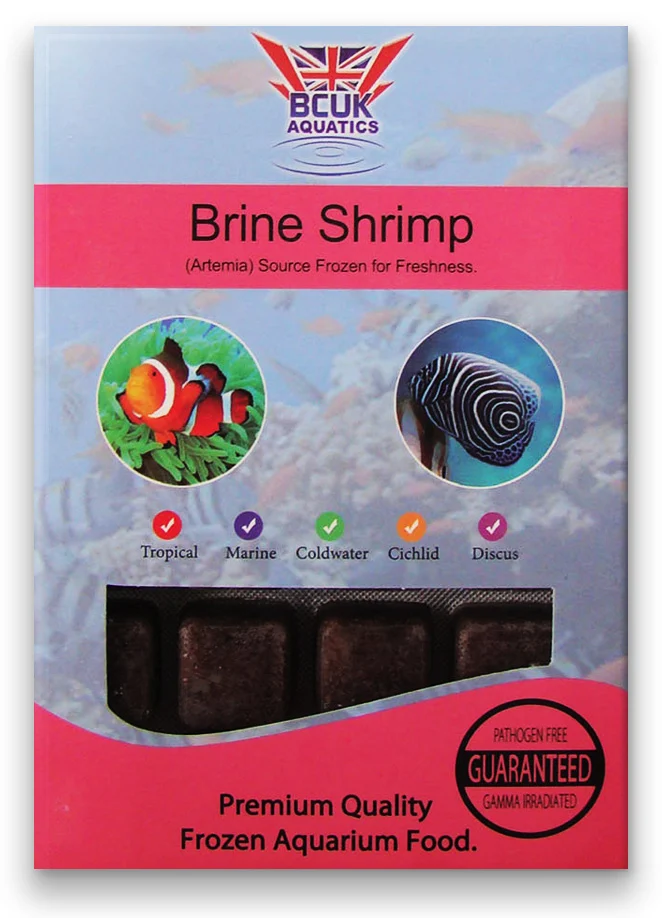
Recommended food
- Arrive alive guarantee
- Overnight, oxygen packed
- You pick the day
Livestock delivery, done properly
- Overnight insulated delivery on fish orders, £19.95, and free collection near Gatwick
- Arrive-alive promise plus our Perfect Health Arrival guarantee
- You choose the delivery day at checkout. We only show days we can genuinely deliver
- £35 minimum on livestock orders. Dry goods ship free alongside fish
Marine Fish Perfect Health Promise
All marine fish have a Perfect Health Arrival guarantee. For the following reasons, we cannot guarantee beyond that.
A number of different reasons can affect why a marine fish does not settle into its new environment. These range from:
- Unsuitable water conditions: incorrect pH, high ammonia and nitrite levels.
- Tank bullies: some marine fish are very passive and will not mix well with more boisterous tank mates.
- Incorrect tank size: please research the fish you are buying, as some will become stressed in a tank that is too small.
If you have any problems on arrival
Please contact us straight away and we will extend your guarantee until the fish is healthy again. You must call on the arrival day to activate this.
01293 749046Credit notes
If any of your aquatic life dies during our guarantees and has been acclimatised in a mature aquarium, please take a photo and email it across and we will send you a credit note.
Please email photographs of the deceased specimens to sales@aquaticstoyourdoor.co.uk.
About this fish
Maximum Size
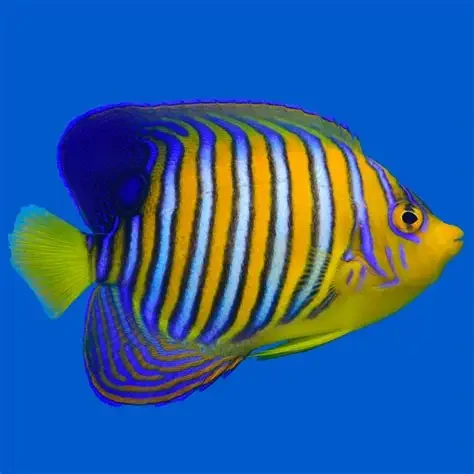
The Royal Angelfish (Pygoplites diacanthus), also known as the Regal Angelfish, can grow to approximately 25 cm (10 inches) in length.
It is one of the most visually striking marine angelfish, recognised by its alternating yellow, orange and white vertical bands, dark markings and distinctive blue-edged fins.
Unlike many other angelfish, the Royal Angelfish has a specialised diet consisting largely of sponges and tunicates found growing on coral reefs.
It is considered a challenging species to maintain in captivity because of its specific dietary requirements and sensitivity to transportation and acclimatisation.
Origin and Export Locations
The Royal Angelfish originates from the Indo-Pacific region, with a widespread distribution across tropical reef environments.
Its natural distribution includes:
The Red Sea.
East Africa.
The Maldives.
Sri Lanka.
India.
Indonesia.
The Philippines.
Papua New Guinea.
Northern Australia.
The Great Barrier Reef.
Parts of the western and central Pacific.
It inhabits coral-rich lagoons, reef slopes and outer reef environments, where it spends much of its time searching for sponges and other natural food sources.
It is commonly exported for the marine aquarium trade from countries including Indonesia, the Philippines and Sri Lanka, although availability and collection locations vary.
Reef CompatibilityReef safe with cautionThe Royal Angelfish is generally considered risky for reef aquariums because of its natural feeding behaviour.
In the wild, it feeds predominantly on sponges and tunicates, but it may also nip at corals and other sessile invertebrates when kept in captivity.
Potential considerations include:
LPS corals: May nip at fleshy coral tissue and polyps.
SPS corals: Generally less likely to cause problems, but occasional picking is possible.
Soft corals: May be damaged through grazing.
Zoanthids: May nip at polyps.
Clams: Potential risk of mantle nipping.
Sponges: Will actively feed on them.
Shrimps and ornamental invertebrates: Generally safe, although individual behaviour can vary.
Although some specimens can be maintained successfully in reef aquariums, there is no guarantee that an individual will leave corals and other invertebrates alone.
A large fish-only aquarium is generally the safer option.
Feeding RequirementsThe Royal Angelfish is primarily a sponge and tunicate feeder, making its dietary requirements particularly important.
It can be difficult to persuade newly imported specimens to accept conventional aquarium foods.
Recommended foods include:
Sponge-based frozen angelfish preparations.
Marine sponge preparations.
Enriched mysis shrimp.
Enriched brine shrimp.
Finely chopped mussels.
Chopped clams.
Finely chopped prawns.
Marine-based frozen preparations.
High-quality angelfish pellets, if accepted.
A diet containing marine sponge material is particularly important for long-term health.
Feed small amounts several times throughout the day rather than relying on one or two large meals.
A mature aquarium with plenty of established live rock and natural sponge growth can be beneficial.
Important: Always ask the supplier to demonstrate that the fish is feeding confidently before purchasing. A Royal Angelfish that refuses food can deteriorate rapidly after introduction.
How Many Can I Keep?The Royal Angelfish is generally best kept singly in a home aquarium.
It can become territorial towards other angelfish, particularly when introduced into an aquarium with limited space.
Considerations include:
Single specimen: Recommended for most aquariums.
Pair: Possible in very large aquariums with carefully selected compatible individuals.
Groups: Not generally recommended for standard home aquariums.
In the wild, Royal Angelfish are often encountered singly or in pairs.
They are protogynous hermaphrodites, meaning they have the ability to change from female to male as part of their natural reproductive development.
If keeping a pair, provide plenty of swimming space, separate hiding places and sufficient feeding opportunities.
Compatibility With Other FishThe Royal Angelfish is generally semi-aggressive and can become territorial, particularly towards other angelfish.
It can coexist with a range of appropriately selected marine community fish, including:
Tangs.
Clownfish.
Anthias.
Wrasses.
Gobies.
Blennies.
Chromis.
Other peaceful reef fish.
However, careful tankmate selection is important.
Avoid housing it with:
Other large and aggressive angelfish.
Fish that may bully or intimidate it.
Extremely timid fish that struggle to compete for food.
Large predatory fish.
Other highly territorial species.
It is generally best introduced into a mature aquarium with established, peaceful tankmates.
Water ParametersParameter
Recommended range
Temperature
24–27°C
pH
8.1–8.4
Specific gravity
1.023–1.026
Ammonia
0 ppm
Nitrite
0 ppm
Nitrate
Keep as low as practical
Alkalinity
8–12 dKH
Stable water conditions, excellent filtration, good oxygenation and regular water changes are essential.
The Royal Angelfish can be particularly sensitive to deteriorating water quality and sudden changes in aquarium conditions.
Aquarium RequirementsThe Royal Angelfish is an active swimming species that requires a spacious, mature marine aquarium with plenty of established live rock.
Recommended minimum volume: Approximately 500–600 litres for a single specimen, with larger aquariums strongly recommended for adult fish.
Aquarium type: Fish-only marine aquarium or carefully monitored reef aquarium.
Aquascaping: Mature live rock with plenty of caves, crevices and natural sponge growth.
Swimming space: Generous open swimming areas are essential.
Filtration: Efficient biological filtration and protein skimming.
Water flow: Moderate to strong water movement is suitable.
Feeding: Several small feedings throughout the day are recommended.
Aquarium maturity: A well-established aquarium with natural sponge growth is particularly beneficial.
This species can struggle during acclimatisation, especially when transported over long distances. It is important to provide a stress-free environment and ensure it is feeding consistently.
Important Considerations Before PurchasingThe Royal Angelfish is one of the most beautiful marine angelfish available, but it is also considered a challenging species to maintain successfully.
There are several important considerations before purchasing:
Specialist diet: Requires sponge-based foods to support its long-term nutritional requirements.
Acclimatisation: Can be sensitive to transportation stress and changes in environment.
Feeding difficulties: Some specimens refuse prepared aquarium foods.
Coral compatibility: May nip at corals, sponges and other sessile invertebrates.
Aquarium maturity: Established live rock and natural food sources are highly beneficial.
Competition: Avoid housing it with aggressive fish that may prevent it from feeding.
Always select a specimen that has a good body condition, clear eyes, intact fins and a strong feeding response.
Ideally, purchase a captive-acclimatised specimen that is already accepting sponge-based prepared foods.
If it does not arrive alive, you do not pay for it.
Photograph the bag unopened, send it to us within four hours of delivery, and we will put it right with a refund or a replacement.* Our guarantee on marine fish covers their health on arrival. If anything concerns you, please ring us on the day they arrive and we will extend it until the fish is healthy again.
*Whether we refund or replace is our decision and depends on the fish and its cost. A replacement may travel with a future order rather than straight away.